Qom Seminar Explores Prophet-Inspired Leadership Model Through Hezbollahs Legacy
In the heart of Qom, a city renowned for its theological debates, scholars converged on Sunday, 21 June 2026 to dissect how a prophetic blueprint could steer modern resistance movements.
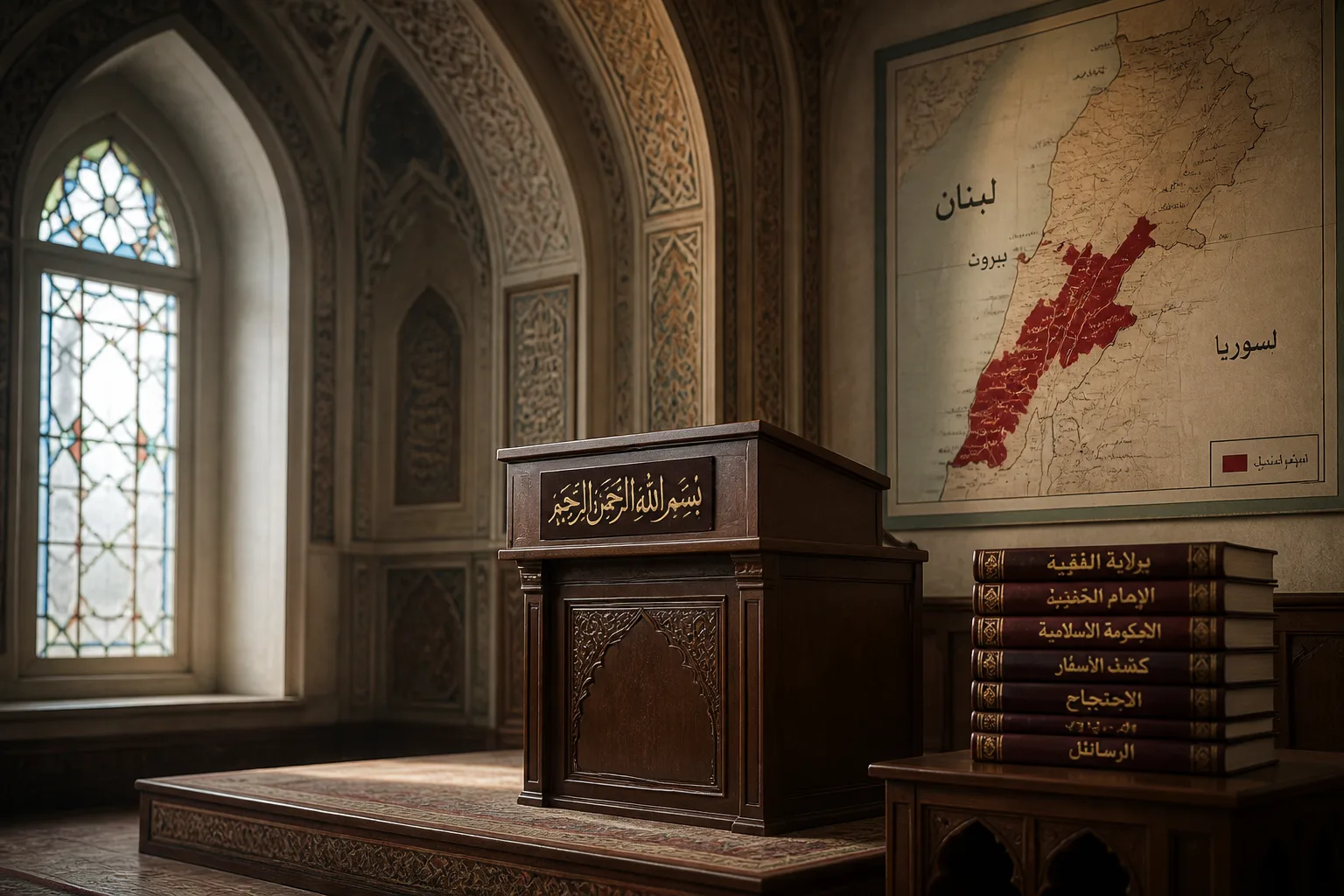
The scientific seminar, titled The Model of Civilization‑Building Leadership in the Mirror of the Prophetic and Alawite Conduct; A Comparative Study with the Performance of Martyr Sayed Hassan Nasrallah, was organized by the Hajj and Pilgrimage Research Institute in partnership with the Omana al‑Rasul Scientific Congress. The gathering sought to examine how the leadership style of the Prophet Muhammad and Imam Ali might be translated into contemporary Islamic resistance, using Hezbollah in Lebanon as a case study.
According to the ABNA report, the event was led by Hojat al‑Islam Mohammad Saeed Najati, a scholar noted for his work on Islamic history and political theory. Najati introduced a theoretical framework that links the Prophet’s model of governance—rooted in monotheism, justice, and a focus on the Hereafter—to the leadership of Hezbollah. He cited the late Hassan Nasrallah, who guided the organization from 1992 until his death in 2024, as a living example of the model’s extension.
Najati first outlined the core components of the “civilisation‑building leadership” model. He identified monotheism and God‑centeredness as the foundational pillar, followed by belief in the Hereafter, submission to divine authority (Wali), rationality, innovation, and technology. Additional elements include justice, courage, martyrdom, popular participation, ethical conduct, and sustainable institution‑building. The scholar argued that these components were evident in the Prophet’s conduct and in Hezbollah’s political and military strategies.
The seminar then moved to a comparative analysis. Najati highlighted Nasrallah’s background—born in 1960, educated in Najaf, and a key figure in Hezbollah’s formation—and pointed out the organization’s use of modern technology, from rocket development to media outreach, as evidence of the rationality and innovation pillar. He also presented Hezbollah’s extensive social services network—hospitals, schools, and welfare programs—as proof of the justice and sustainable institution‑building pillars.
According to the ABNA report, Najati concluded that Hezbollah’s experience in Lebanon illustrates the potential for the civilisation‑building leadership model to be replicated beyond the Iranian Revolution. He suggested that the model’s emphasis on faith, divine authority, rational governance, and social welfare can be adapted to different historical and geographical contexts. The seminar’s setting in Qom—a major center of Shia scholarship—underscored its focus on religious authority and its influence on political structures. The event attracted scholars from across the Middle East and the broader Islamic world, though it did not include political leaders.
In summary, the 21 June seminar in Qom examined how the leadership principles of the Prophet Muhammad and Imam Ali can inform contemporary Islamic movements, using Hezbollah’s leadership under Hassan Nasrallah as a case study. The discussion reinforced the idea that a faith‑based, justice‑oriented leadership model can be adapted to modern contexts, potentially influencing future political and social developments in the Arab and Islamic world.