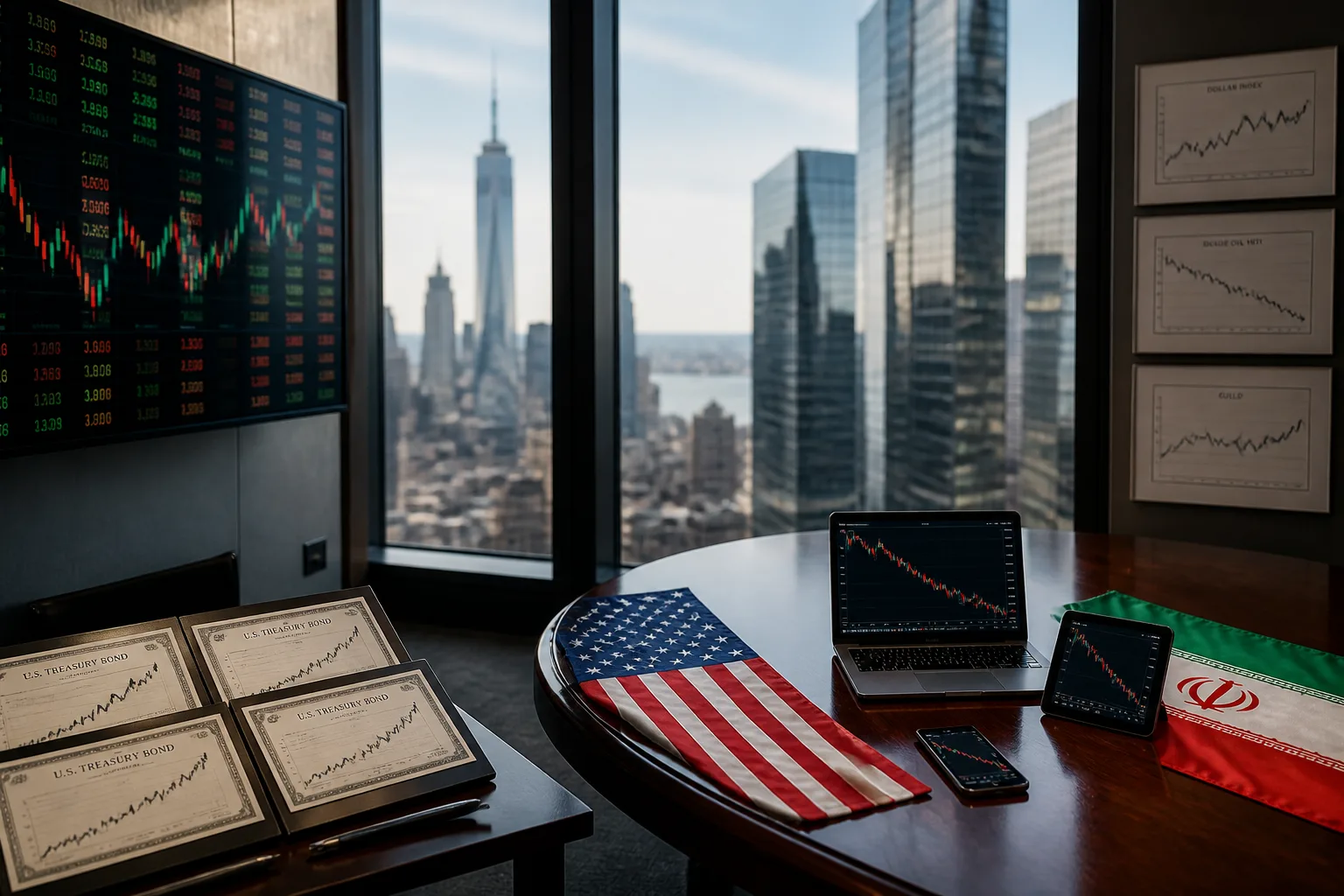
Wall Street Mixed as US-Iran Talks Resume, Tech Stocks Weaken, Treasury Yields Rise
The U.S. equity market finished Monday with a patchwork performance: the S&P 500 slipped 0.4 % to 4,100.3, the Nasdaq Composite fell 1.3 % to 13,200.8, while the Dow Jones Industrial Average edged up 0.3 % to 33,500.2. Treasury yields nudged higher, with the 10‑year benchmark at 4.51 % and the 2‑year at 4.24 %. Oil prices eased to $74 a barrel for U.S. crude and $78 for Brent.
The day’s mixed picture followed a weekend of uncertainty surrounding U.S.–Iran negotiations. After a brief pause on Sunday, the two sides resumed talks in Switzerland on Monday, marking the first day of a new round of diplomatic engagement. According to reports, the parties agreed on a 60‑day roadmap aimed at finalising a comprehensive settlement. The accord, reached after a ceasefire that ended a three‑month war, includes lifting the U.S. naval blockade of the Strait of Hormuz and opening a window for talks on Iran’s nuclear program, sanctions relief and asset release.
Analysts say the market’s ambivalent reaction reflects the dual impact of geopolitical risk and domestic economic data. While easing tensions in the Middle East lifts energy prices, the rise in Treasury yields signals persistent expectations of higher real rates. In an effort to temper a sudden spike in borrowing costs, the Federal Reserve left the federal funds target range unchanged at 3.50‑3.75 % on Wednesday—a move widely anticipated.
The technology sector led the sell‑off. The Nasdaq’s decline was driven largely by a retreat in AI‑related stocks. To bolster demand for AI workloads, Micron Technology (MU) and AI‑startup Anthropic announced a partnership to develop memory and storage infrastructure. The collaboration was welcomed by investors, and MU’s shares closed up 6.3 %. Dell Technologies (DELL) and Super Micro Computer (SMCI) also unveiled new AI servers powered by Nvidia’s Vera Rubin GPUs, signalling continued investment in AI hardware.
Despite these bright spots, other tech names suffered. The “Magnificent Seven” – a group of large‑cap technology companies – all posted declines, and SpaceX (SPCX) fell more than 16 % after a report that its launch schedule had been delayed. The broader sell‑off is attributed to concerns over the sustainability of the AI boom and the impact of higher interest rates on capital‑intensive technology firms.
Oil markets reacted to the diplomatic progress with a modest decline. Crude futures fell to $74 a barrel, while Brent settled at $78. The drop is partly due to expectations that the resumption of shipping through the Strait of Hormuz will increase supply, and partly to a broader correction in energy prices following a brief spike earlier in the week.
The U.S. economy remains in a late‑cycle phase, according to a Seeking Alpha analyst. The analyst noted that real yields are rising and that traders are pricing in two additional Fed rate hikes in 2026. The analyst also highlighted a potential “collapse” in the AI trade, driven by concerns over return on investment for AI capital expenditures.
In summary, U.S. equity markets ended the week with a mixed performance, reflecting a combination of geopolitical developments, rising Treasury yields, and a cautious stance on the AI sector. The resumption of U.S.–Iran talks and the agreed 60‑day roadmap provide a temporary lift to Middle East‑related risk, but the broader market remains sensitive to domestic economic signals and the trajectory of the Federal Reserve’s policy.
The next steps will depend on the progress of the diplomatic negotiations and the evolution of Treasury yields. Investors will likely watch for any further developments in the U.S.–Iran talks, as well as the Fed’s policy decisions, which could influence the direction of both equity and bond markets in the coming weeks.