UN Secretary-General Urges Yemen Parties to Seize Window of De-escalation Amid Regional Tensions
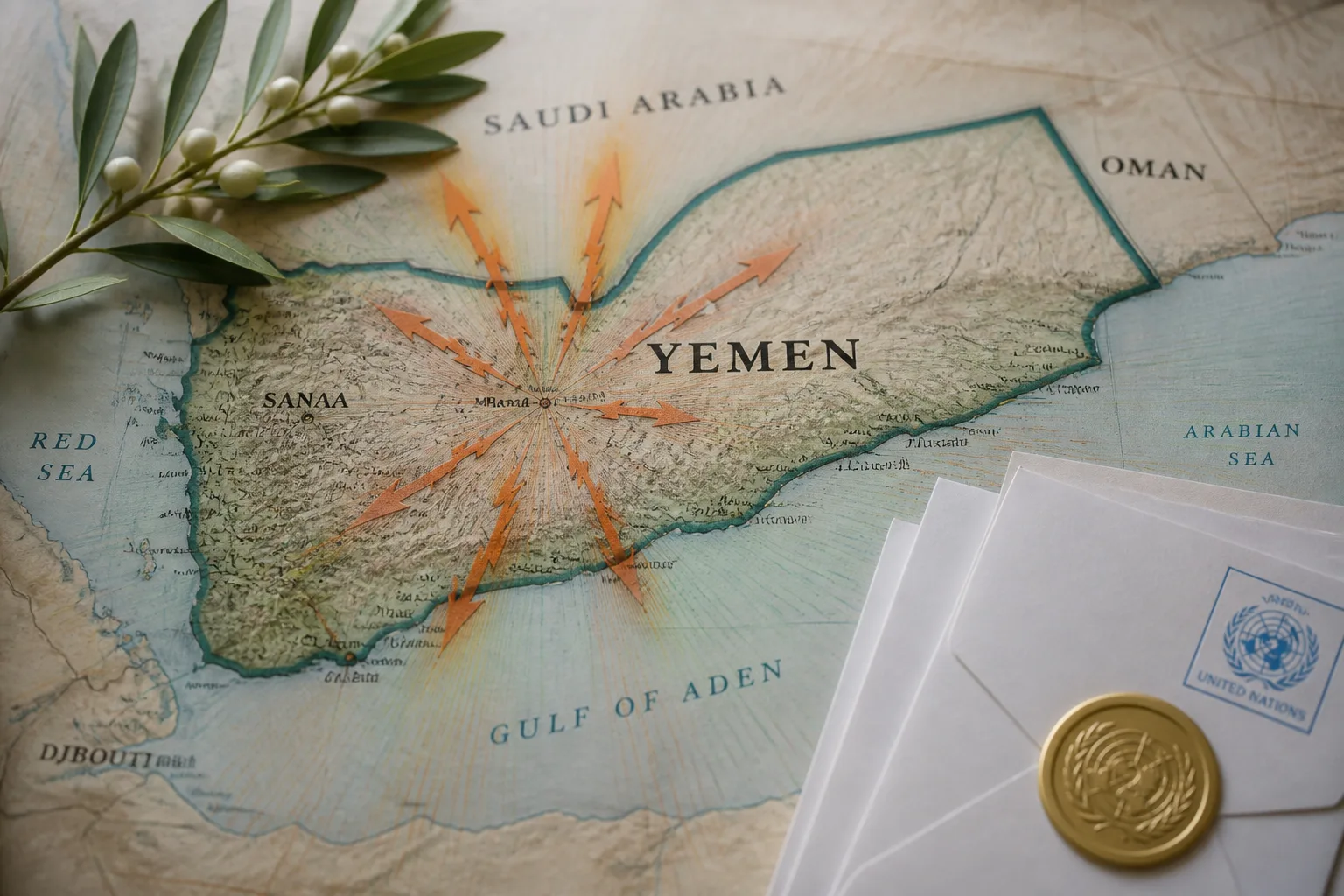
On 16 June 2026, the United Nations Secretary‑General addressed the Security Council, urging Yemeni factions to take advantage of a fleeting opportunity for calm amid a broader regional flare‑up. He opened by highlighting the recent U.S.–Iran agreement, noting that its potential to reshape the Yemen peace process could finally ease the three‑year‑long strain that has deepened mistrust and stalled compromise.
The Secretary‑General reviewed the state of the Yemeni conflict, stressing that while the war remains unresolved, the relative calm that began with the 2022 truce has persisted. He warned that entrenched front lines are draining resources, fracturing society, and pushing students and teachers into armed groups for economic survival. The spill‑over of regional tensions has tightened the already fragile economy, which depends heavily on imports. Rising food and fuel costs have pushed inflation higher, and in recent weeks protests erupted in Aden and other governorates over electricity shortages amid a scorching summer.
To address the energy crisis, Saudi Arabia announced a $150 million grant to supply fuel to Yemeni power stations. The Secretary‑General called the grant “critical” for restoring electricity in government‑held areas, noting that it forms part of a broader $1.9 billion development package unveiled earlier in January 2026.
Security and accountability were also highlighted. The Secretary‑General praised the Yemeni government’s efforts to enhance security and investigate the assassination of public figures, arguing that such investment is essential for building confidence and opening avenues for dialogue, including on the southern issue.
A diplomatic breakthrough emerged with the release of more than 1,600 conflict‑related detainees, a result of 14 weeks of negotiations in Amman under UN auspices. The Secretary‑General called it the largest release operation in the history of the conflict and thanked Saudi Arabia for its support, Jordan for hosting the talks, and Oman for earlier negotiations in Muscat that paved the way. He also noted that the International Committee of the Red Cross would assist in implementing the release.
On the military and security track, the Secretary‑General reported that his office convened two meetings under the Military Coordination Committee (MCC). The first involved representatives of the Saudi‑led Joint Forces Command and Ansar‑Allah; the second brought together the Joint Forces Command and the Yemeni government. The meetings aimed to exchange views on security priorities and improve communication channels, with a trilateral MCC meeting slated for the near future.
Economic progress was also outlined. The Secretary‑General said his office has been holding consultations on a range of economic issues that must eventually be addressed through negotiations between the parties. He emphasized that economic reforms prioritized by the Yemeni government should improve living conditions, strengthen public revenues, and restore confidence in public institutions.
The speech concluded with a stark reminder of the humanitarian toll. The Secretary‑General reported that 73 United Nations personnel remain arbitrarily detained by Ansar‑Allah, many since the wave of detentions in June 2024. He said that the detentions violate international law, cause deep suffering to families, and constrain the UN’s ability to assist millions of people. He referenced the Security Council’s condemnation on 6 June and its demand for the unconditional, safe, and immediate release of those held. The Secretary‑General pledged that the UN would continue to press for their release and urged the Council to maintain its focus on Yemen.
In closing, the Secretary‑General stressed that the risk of further destabilisation remains as long as Yemen’s conflict remains unsettled. He called on the parties to use the current window of regional de‑escalation to revive a political process that can sustainably end the conflict, reaffirming the UN’s readiness and commitment to support both the parties and the Yemeni people.