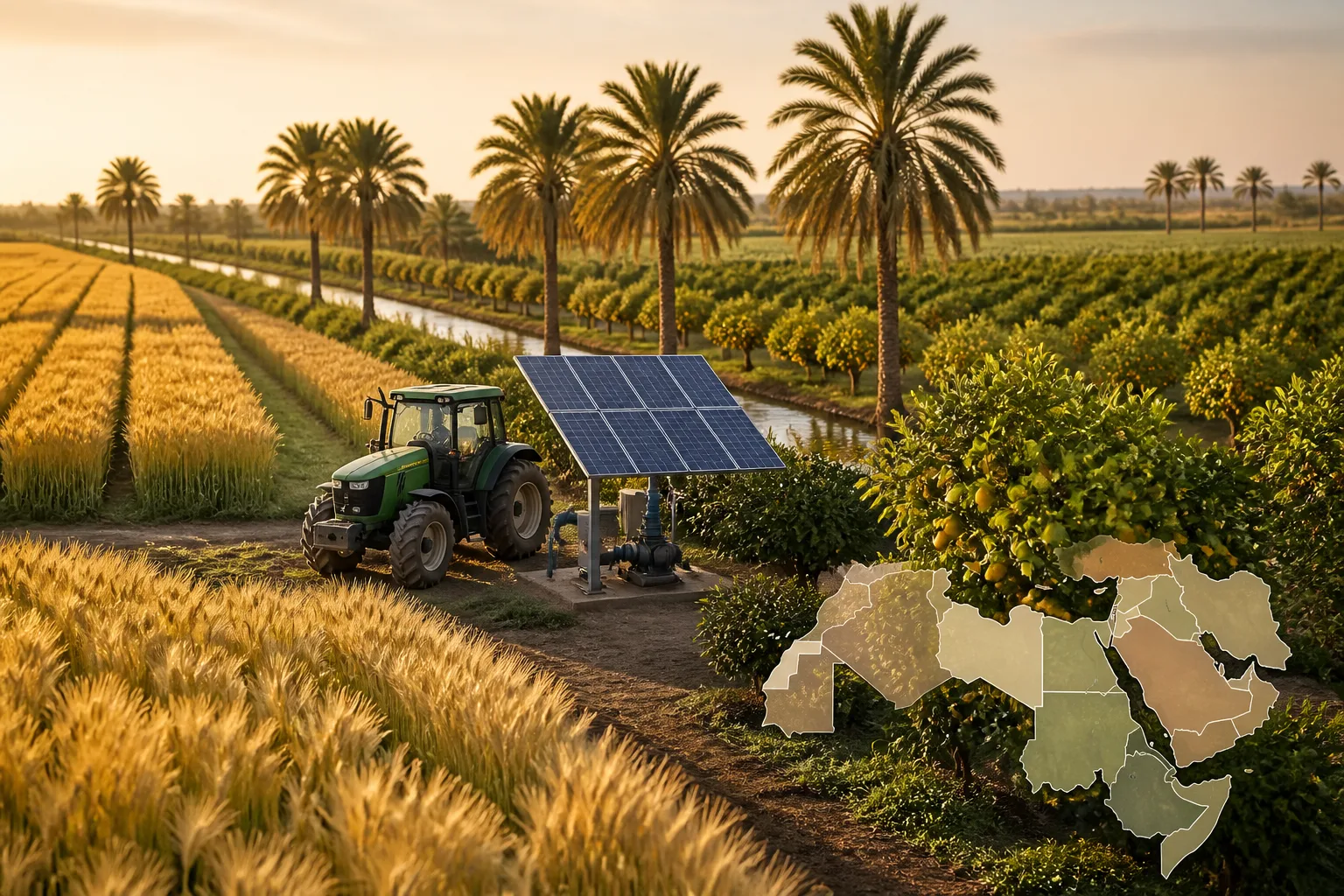
World Bank Projects Five Million New Jobs in MENA, Afghanistan, Pakistan by 2050 Through Agrifood Investment
The World Bank’s latest regional report, Building Food Security, Creating Jobs, states that the Middle East, North Africa, Afghanistan and Pakistan (MENA‑AP) can create five million new jobs by 2050 if investment and business reforms are sustained, with the food and agriculture sector playing a central role.
The report notes that the agrifood industry already employs about 63 million people in the region – roughly one in every three workers – and that on‑farm employment is falling while jobs in processing, logistics and food services are expanding at twice the global rate. The sector’s growth is seen as a key lever for both employment and food security.
According to the World Bank, the region’s working‑age population is expected to rise by 220 million over the next 25 years, a 40 percent increase that would be the second‑largest projected rise among all world regions. Youth unemployment remains high, ranging from 24 percent to 28 percent, and more than half of the population is under 30. The report argues that, if the right policies are adopted, the agrifood sector can become a major source of decent jobs for young people.
Pakistan’s agriculture sector accounts for 34 million workers, or about half of the agrifood employment in the region. In the Middle East and North Africa, agriculture provides up to one in three jobs in middle‑income countries, but only about one in ten in the Gulf Cooperation Council (GCC) states. On‑farm jobs represent 79 percent of total employment in the sector, while off‑farm jobs – which include processing, transport and retail – are growing strongly but are still below potential.
Between 2010 and 2023, the region added 2.9 million off‑farm jobs, a 28 percent growth rate that outpaces the global average of 14 percent. The GCC saw a net increase of 208,000 jobs (43 percent growth), and the MENA middle‑income countries added nearly two million jobs (53 percent growth). In the GCC, the growth is driven by demand for food services such as restaurants and catering, reflecting higher incomes and tourism.
The World Bank stresses that investment in the agrifood system can address food insecurity while creating employment. It calls for “more ambitious investment and policymaking” to unlock the sector’s potential, noting that the current trajectory is insufficient to meet the region’s demographic and economic needs.
The report is part of the World Bank’s ongoing effort to provide policy guidance for the MENA‑AP region. It highlights that structural transformation – moving workers from low‑productivity on‑farm roles to higher‑value processing and services – is a viable pathway to job creation and economic resilience.
In summary, the World Bank’s findings suggest that sustained investment and reforms in the agrifood sector could generate five million jobs by 2050, help secure food supplies, and offer opportunities for the region’s growing youth population. The next steps involve translating the report’s recommendations into concrete policy measures and mobilising public and private capital to support the sector’s expansion.