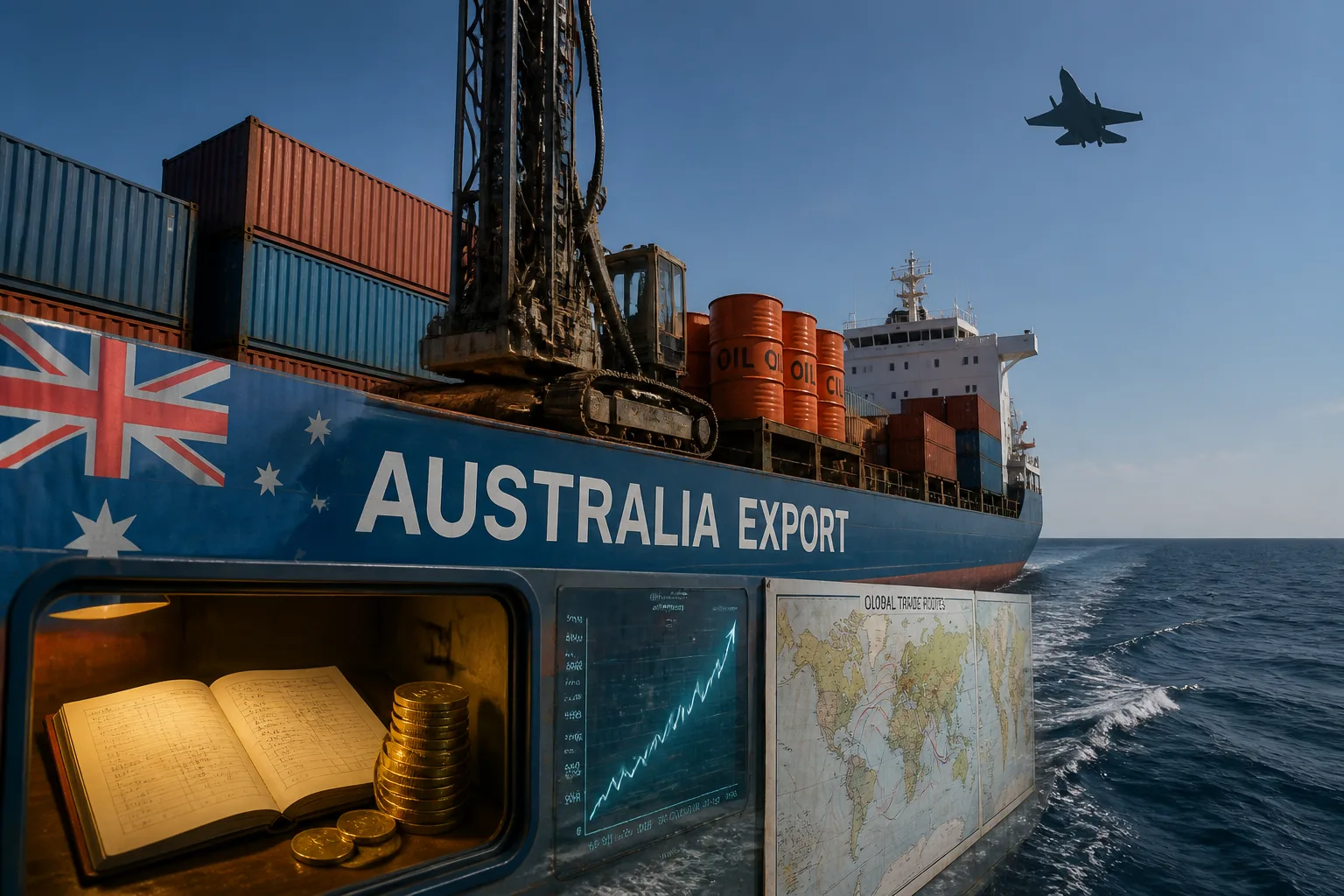
Australia Forecasts $416 bn Export Revenue Windfall Amid Middle East Conflict, Economists Urge Savings
The Australian government’s Department of Industry, Science and Resources has projected that export revenue for the 2026‑27 financial year will reach $416 bn, a jump of $42 bn from the December estimate. The forecast rests on the premise that shipping through the Strait of Hormuz will remain disrupted until July, keeping commodity prices high well into the next fiscal year.
The surge is tied to the ongoing Middle East conflict. Early‑2026 oil prices have already climbed to about $120 per barrel, analysts say, and the higher energy costs are expected to lift Australian liquefied natural gas (LNG) exports. The department now estimates LNG will bring in $67.6 bn in 2026‑27—$21 bn above the previous outlook. Other drivers cited include investment in artificial intelligence, expanding trade with China, India and Vietnam, and a national push for energy independence and renewable power.
Australia’s economy has been under pressure from inflation. In 2026 the Reserve Bank of Australia (RBA) raised the cash rate three times, adding 75 basis points to move from 3.60 % to 4.35 %. Economists predict a further 25‑basis‑point hike in August, taking the rate to 4.60 %. The tightening reflects a broader effort to curb inflation, which has been fueled in part by higher commodity prices.
Against this backdrop, AMP chief economist Shane Oliver has warned against turning the windfall into discretionary spending. "If the economy was collapsing into a recession then there could be an argument to spend some of it, but that is currently not the case," Oliver said. He argued that the temptation to increase government spending has already pushed public outlays above pre‑pandemic levels, creating "spare capacity" that feeds inflation.
Oliver also cautioned that any attempt to return a portion of the windfall to households would likely be offset by higher inflation. "Australians would get a benefit in the form of lower petrol prices, but the truth is those with a mortgage end up having to pay higher rates," he said. Instead, he recommends that the government save the additional revenue and use it to reduce the national debt.
The Australian Office of Financial Management reports the country’s net debt stands at $974.9 bn. Oliver noted that saving the windfall would "take pressure off inflation and minimise any further increase in levels of public debt." He added that a sustained savings strategy could eventually bring the budget back into surplus, allowing debt repayments to accelerate.
The forecast and accompanying policy debate underscore the complex trade‑offs facing Australia. While higher export earnings could boost fiscal capacity, the risk of stoking inflation and exacerbating debt levels remains significant. The government’s next steps will likely involve balancing the benefits of a temporary revenue surge against the long‑term goal of maintaining price stability and fiscal prudence.
In short, Australia is poised to receive a substantial windfall from higher commodity prices driven by Middle East tensions, but economists urge that the extra revenue be preserved rather than spent, to safeguard the economy against inflationary spirals and to reduce the already elevated national debt.