Middle East Flight Operations Remain Unchanged Amid Escalating US-Iran Conflict
In the wake of the latest collapse of the US‑Iran ceasefire, flight‑planning specialists at OpsGroup report that the Gulf’s airspace remains largely open. Most Gulf flight information regions (FIRs) continue to allow overflights, although airlines are increasingly opting for tactical routes and flow‑management procedures to avoid potential conflicts.
The only FIR that has closed is the OKAC/Kuwait region. OpsGroup notes that overflights through Kuwait will remain prohibited until at least 4 August, following a decision by the country’s aviation authorities to limit traffic amid heightened regional tensions.
European Union Aviation Safety Agency (EASA) has issued a broader caution. The agency urges operators to steer clear of the airspace over Bahrain, Kuwait, Qatar, the United Arab Emirates, and the Gulf of Oman at all flight levels. It also recommends exercising extra care before entering the airspace of Israel, Jordan, Oman, and Saudi Arabia. In Saudi Arabia, a missile and drone strike earlier this week forced the temporary shutdown of four southern airports—OEAB (Abha), OGEN (Jizan), OENG (Najran), and OESH (Sharurah).
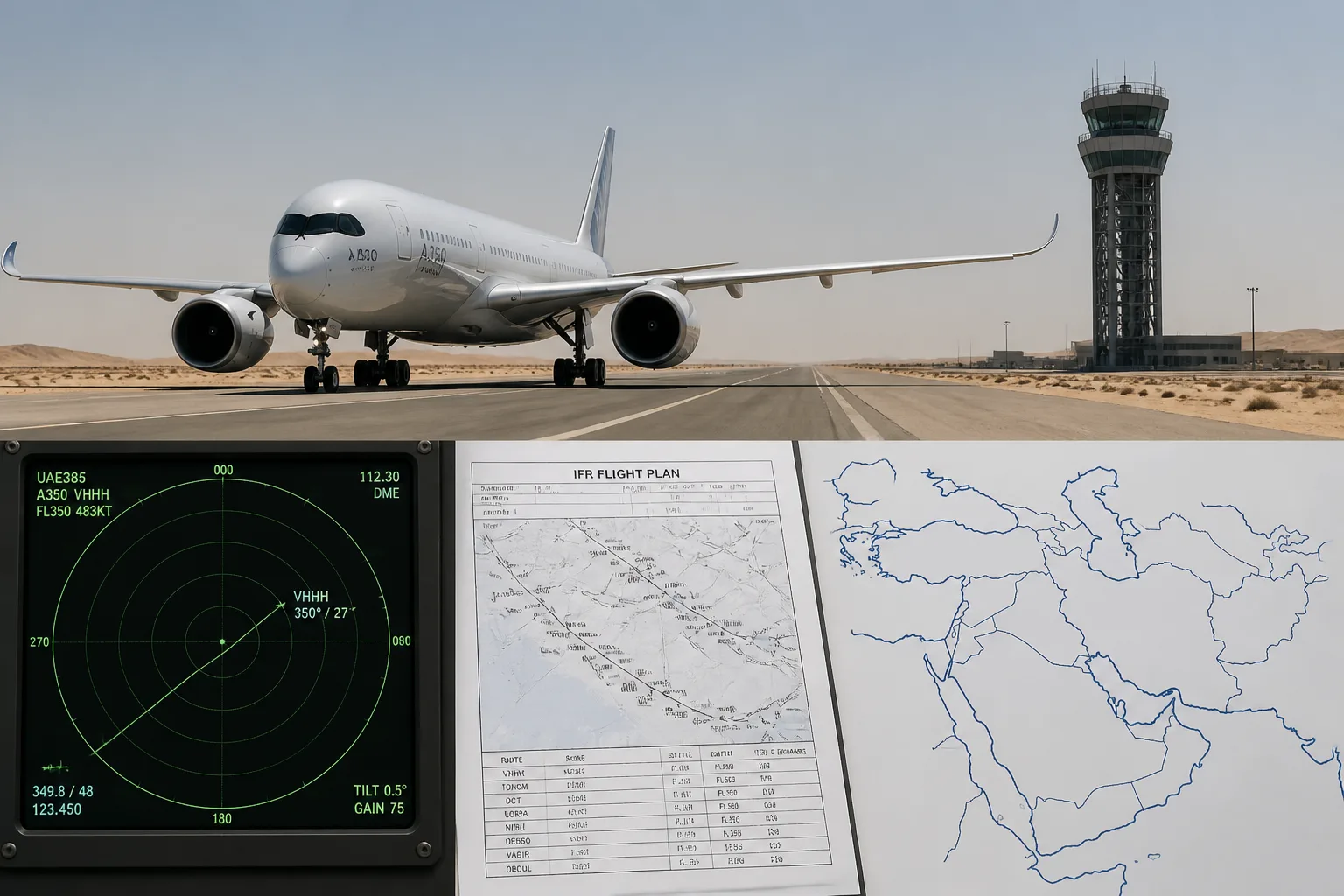
For airlines routing between Europe and Asia, OpsGroup confirms that the two primary corridors remain unchanged from their March configuration. The northern route still follows the Caucasus, then over Afghanistan, while the southern corridor passes through Egypt, Saudi Arabia, and Oman. Neither path has been altered in response to the current hostilities.
GPS jamming and spoofing continue to pose a risk across the region. OpsGroup reports that air‑traffic control centres are compensating by issuing a higher than normal number of runway‑heading departure notifications and radar vectors, warning that such interference can disrupt navigation and increase pilots’ workload. Operators are advised to anticipate fuel delays, additional towing or hangar time, and slower ground handling at some airports. The combination of heightened procedural requirements and potential electronic interference can affect flight schedules and operational costs.
The backdrop to these developments is the renewed hostilities that began in February 2026, when the United States and Israel launched a joint attack on Iranian targets. The ceasefire negotiated in June 2026 collapsed in July, sparking a resurgence of military activity around the Strait of Hormuz and other strategic points. Despite the escalation, the International Civil Aviation Organization (ICAO) has not mandated new airspace restrictions beyond those already in place. OpsGroup’s monitoring indicates that the majority of Gulf FIRs continue to provide standard flight‑information services, though operators are urged to remain vigilant.
EASA’s advisory remains in effect until at least 29 July, when it may be reviewed in light of further developments. Airlines operating under EASA’s jurisdiction are expected to comply with the avoidance instructions to mitigate safety risks. In Kuwait, the prohibition on overflights is expected to lift after 4 August, pending a review of security conditions. Until then, airlines must reroute around the OKAC/Kuwait FIR, potentially adding distance and fuel consumption to certain flights.
The temporary closure of Saudi airports in the south has disrupted regional connectivity. Airlines that previously used these hubs for passenger and cargo traffic must seek alternative routes, potentially increasing transit times. The convergence of geopolitical tension, electronic interference, and operational restrictions underscores the fragility of air transport in the Middle East during periods of conflict. Operators are encouraged to consult the latest updates from OpsGroup, EASA, and national aviation authorities before planning flights.
In summary, while the US‑Iran ceasefire collapse has heightened security concerns, flight‑information regions in the Gulf remain largely open, with Kuwait’s airspace closed until early August. European regulators advise avoidance of several Gulf airspaces, and Saudi Arabia has temporarily closed four southern airports. GPS spoofing remains a concern, and operators should prepare for procedural delays and increased handling times.