Indonesias Balancing Act: From Humanitarian Aid to Quiet Trade Amid Rising Internal Divisions
Indonesia has long maintained a constitutional stance in support of Palestinian sovereignty, a position that has guided its foreign policy since independence. The government has consistently rejected colonialism and has framed Palestinian rights as a core element of its non‑aligned diplomatic identity. Yet the domestic debate over the Israel‑Palestine conflict has become increasingly polarized, with public opinion and social media reflecting a spectrum of religious, ideological and economic perspectives.
In the wake of the October 7, 2023 escalation, Indonesian media coverage diverged sharply. Some outlets focused on humanitarian suffering, while others attempted a neutral tone. In practice, the binary religious framing of the conflict dominated online discourse, creating a gap between Jakarta’s formal diplomacy and the emotional tenor of the populace. The Pew Research Center survey of June 2025 found that roughly 80 percent of Indonesians expressed hostility toward Israel, a figure that underscores the intensity of public sentiment.
Support for Palestine in Indonesia is not monolithic. Constitutional nationalists tend to view the issue through international law and the two‑state solution, aligning with the Palestinian Authority and Fatah. Islamist groups, by contrast, see the conflict as a religious duty and often back armed resistance movements such as Hamas. The July 2024 Beijing Declaration further exposed this split: some welcomed the declaration as a diplomatic opening, while others interpreted it as a boost for armed resistance.
The Sunni‑Shia divide also colors Indonesian opinion, especially in the wake of Iran’s missile strikes on Israel. Sunni‑majority commentators, including Felix Siauw, argued that Tehran’s actions were tactical rather than altruistic. In contrast, the Nahdlatul Ulama, a major Sunni organization, adopted a cautious stance that echoed the government’s call for de‑escalation.
A minority of pro‑Israel voices exists in Indonesia, primarily among Christian communities in Minahasa and Papua, a small Jewish community in Tondano, and a technocratic urban elite. The Christian groups, inspired by Christian Zionist theology, display Israeli symbols as expressions of minority identity. In Papua, such displays sometimes intertwine with local political narratives. The Jewish community in Tondano, led by Rabbi Yaakov Baruch, maintains a clear separation between religious practice and political Zionism. The technocratic group argues that engagement with Israel is necessary for economic and technological cooperation, especially in cybersecurity, fintech and precision agriculture. The high‑profile incident involving beauty‑pageant finalist Merince Kogoya, who was removed from a competition after waving an Israeli flag, illustrates the social costs of public pro‑Israel expression.
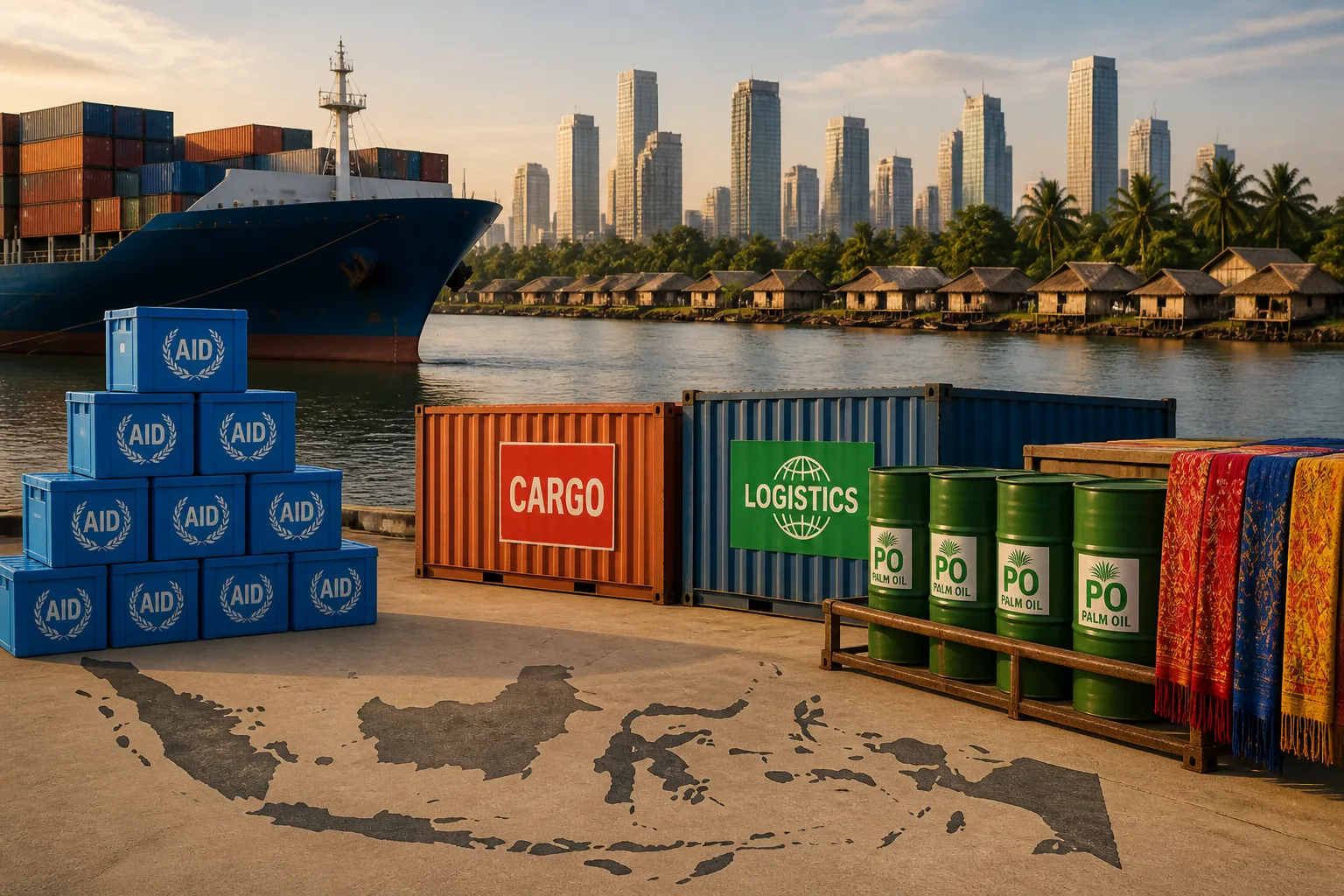
Indonesia’s official humanitarian actions remain robust. The country has dispatched aid by air, converted the naval vessel KRI Dr. Radjiman Wedyodiningrat‑992 into a hospital ship, supported the construction of an Indonesian hospital in Gaza through the Ministry of Religious Affairs, and, under President Prabowo Subianto, offered scholarships to 22 Palestinian military cadets at the Indonesian Defense University. The government also maintains diplomatic ties with Iran and other Palestinian allies, focusing on protecting citizens and preserving diplomatic channels.
Commercial relations with Israel, however, continue quietly. Trade between the two sides reached US$240.3 million by October 2025, indicating that economic pragmatism can coexist with a public anti‑Israel stance. These transactions largely operate outside the moral debates that dominate the public sphere.
Indonesia’s bid to join the OECD has highlighted the tension between public sentiment and diplomatic realities. Because Israel is an OECD member, it holds veto power over Indonesia’s accession. In response to Jakarta’s support for South Africa’s genocide case against Israel at the International Court of Justice, Tel Aviv reportedly obstructed Indonesia’s application. After three months of negotiations mediated by OECD Secretary‑General Mathias Cormann and former Israeli Foreign Minister Israel Katz, a written understanding emerged that Indonesia would need to establish formal diplomatic relations with Israel to proceed. The foreign ministry denied any such agreement, citing concerns about domestic political fallout.
President Prabowo’s approach signals a shift toward pragmatic engagement. During his speech at the 80th United Nations General Assembly in September 2025, he acknowledged Israel’s security needs and proposed deploying up to 20,000 UN peacekeepers to Gaza. He concluded his remarks with the word “Shalom.” This move departs from Indonesia’s traditional anti‑Israel rhetoric and seeks to influence the peace process from within.
External actors continue to vie for influence over Indonesian public opinion. Iran‑backed media promote an anti‑imperialist narrative, China leverages its role in brokering the Beijing Declaration to strengthen its multilateral standing, and the United States offers economic incentives under the Abraham Accords framework to encourage normalization. The competition among these powers risks amplifying external influence campaigns in Indonesia.
The Indonesian government’s future policy will likely balance economic pragmatism with its constitutional commitment to Palestinian rights. Any significant escalation in Gaza that results in large‑scale civilian casualties could provide political ammunition for opponents of a more open engagement with Israel. As Jakarta navigates these competing pressures, the country’s diplomatic posture will remain a tightrope between global economic interests and long‑standing moral principles.