Iran Launches Attacks on Gulf States, Prompting Regional Condemnation and Escalating U.S.-Iran Conflict
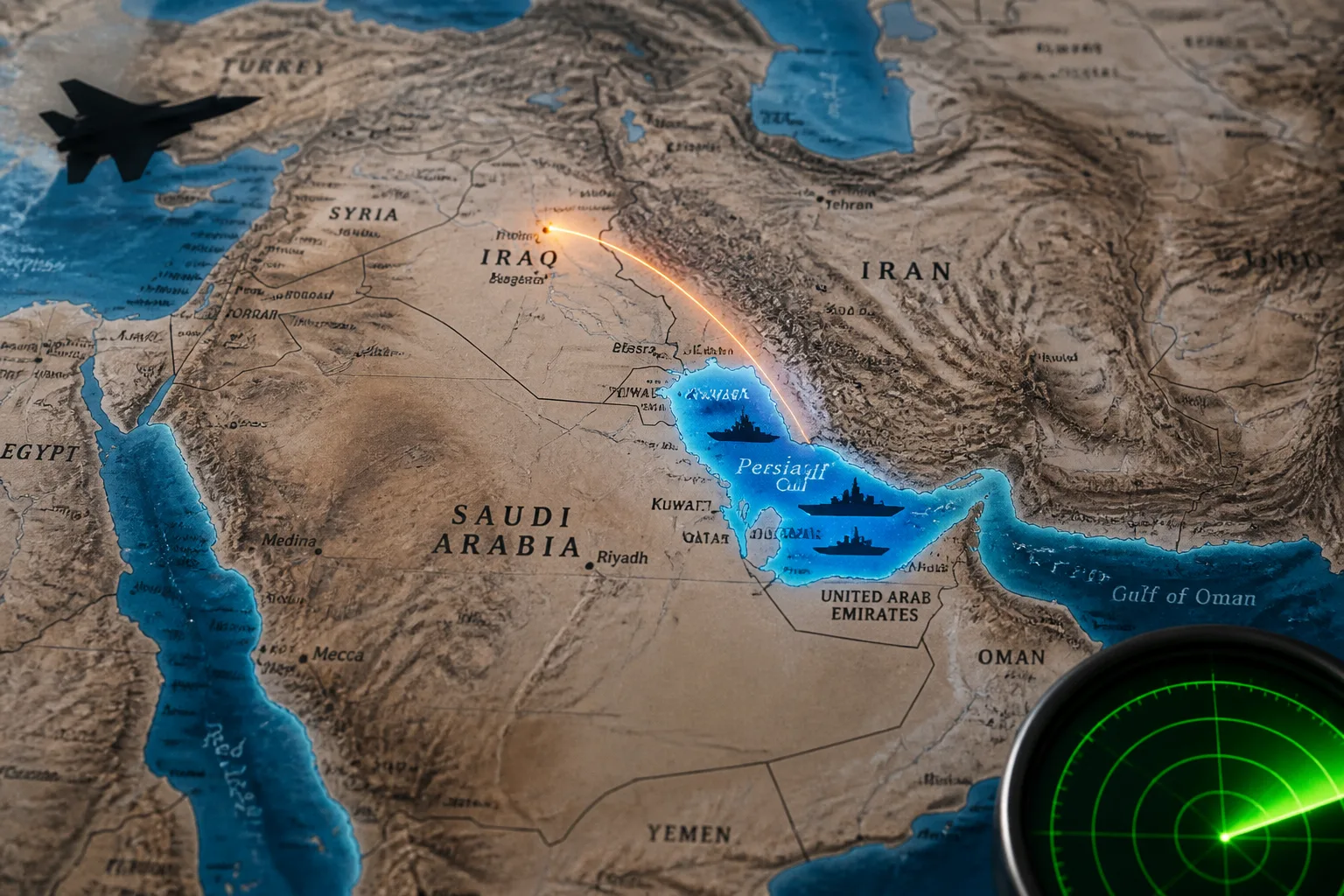
At dawn on July 13, 2026, Iranian forces launched a coordinated assault on key sites across Kuwait, Bahrain, Oman, Jordan and Iraq, hitting civilian power plants, desalination plants and U.S. military bases. The Islamic Revolutionary Guard Corps (IRGC) framed the operation as a strike on U.S. and allied installations, a characterization that has drawn sharp rebuke from Arab governments and escalated an already volatile U.S.–Iran conflict.
Egypt’s Ministry of Foreign Affairs, on July 14, denounced the Iranian attacks as “flagrant violations of the sovereignty of Arab states” and a “dangerous escalation that threatens Gulf security and regional stability.” Cairo reaffirmed its solidarity with Kuwait, Bahrain and Oman, pledging support for measures to safeguard their security, stability and territorial integrity. The statement also noted that Iranian strikes had expanded to Jordan, Iraq and U.S. military facilities across the region.
Qatar followed suit, condemning the renewed Iranian attacks on Jordan, Bahrain and Kuwait. Doha said the strikes violated international law, the United Nations Charter, and principles of good neighbourliness. The Qatari foreign ministry specifically cited attacks on electricity generation and water desalination facilities in Kuwait as having crossed “all red lines” and called for an immediate cessation of military operations and a return to diplomatic negotiations.
Kuwaiti authorities reported that an Iranian strike hit a power generation and desalination facility on July 13. Firefighters were dispatched to two separate sites, and several emergency responders and one facility employee were injured while containing the fires. The Kuwaiti government described the repeated targeting of vital infrastructure as part of a “systematic aggressive approach.”
In Bahrain, warning sirens were activated after the country’s defence force said its air‑defence systems intercepted and destroyed Iranian aerial attacks that targeted civilian areas and private property. Bahraini officials urged residents to avoid approaching suspicious missile or drone debris.
Jordan’s armed forces said they intercepted and shot down four drones that entered the kingdom’s airspace over the previous 24 hours, with no casualties or material damage reported. Jordanian officials also noted that the attacks were part of a broader pattern of Iranian aggression aimed at turning Iraqi territory into a battleground for regional conflicts.
Iraq’s President Nizar Amedi condemned the attacks on Erbil and Sulaymaniyah, reiterating Baghdad’s rejection of any attempt to use Iraqi territory for regional hostilities.
The IRGC claimed responsibility for the attacks, stating that they targeted U.S. military bases and facilities in Jordan, Qatar, Kuwait and Bahrain, as well as communications and data infrastructure. The group listed specific sites, including Azraq Air Base in Jordan, Al Udeid Air Base in Qatar, Camp Arifjan and Ali Al Salem Air Base in Kuwait, the Al Ahmadi port area, and Sheikh Isa Air Base in Bahrain. The extent of damage reported by Iran could not be independently verified.
According to U.S. officials cited by CBS News, several American service members were injured in attacks on military bases in Jordan. The Pentagon said the number of U.S. troops wounded since the start of the week had risen to 13. Axios reported that Iran also launched a ballistic missile toward a U.S. military base in Saudi Arabia, marking the first direct Iranian attack on the kingdom in about four months. Saudi authorities activated an early‑warning alert in Yanbu as a precautionary measure.
The Iranian attacks follow successive waves of U.S. strikes inside Iran. U.S. Central Command said its operations targeted military facilities and infrastructure, including bridges, energy installations, and ports, as part of a campaign to degrade Iran’s military capabilities and increase pressure on Tehran over the Strait of Hormuz.
Iranian Deputy Foreign Minister Kazem Gharibabadi accused Washington of violating all its commitments under a previous memorandum of understanding, saying Tehran had suspended its own obligations in response. He added that Iran’s immediate priority was “firm defence” rather than returning to negotiations.
The series of strikes occurs amid a broader U.S.–Iran war that began in February 2026 after U.S. and Israeli forces launched a joint attack on Iranian sites, including the assassination of Iran’s Supreme Leader. A ceasefire was agreed in June 2026, but the latest attacks have raised concerns that the conflict could widen further.
At present, the Gulf Cooperation Council has not issued a joint statement, but regional governments are closely monitoring the situation. The attacks have intensified calls for a renewed diplomatic effort to prevent further escalation while the U.S. continues to conduct retaliatory strikes against Iranian military targets.
The current situation remains fluid, with ongoing military engagements on both sides and a heightened risk of spill‑over into other parts of the Middle East. The international community watches closely as the conflict develops and seeks avenues for de‑escalation.