Palestinian Political Crisis Deepens as Elections Loom and Governance Structures Falter
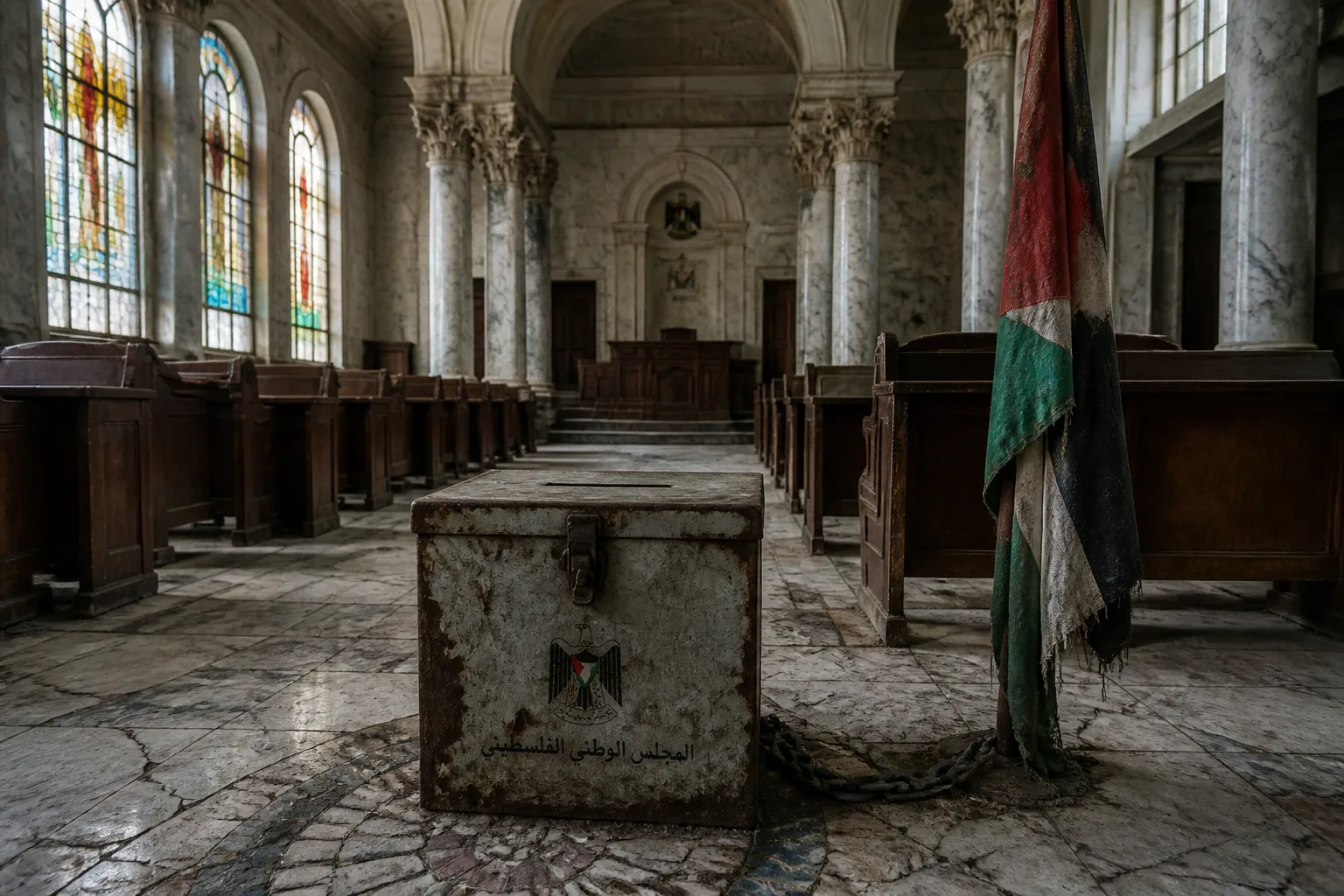
A new chapter opens for the Palestinian Authority (PA) as it announces a return to the ballot box after two decades of political paralysis. On 15 June 2026, PA officials declared that presidential elections will be held in early 2027 and that a legislative vote is scheduled for 28 November 2026. The move follows a 20‑year hiatus from any electoral process in the Palestinian territories, a pause driven by the war in Gaza, the expansion of Israeli settlements in the West Bank and the enduring fragmentation that has plagued the PA since the Oslo Accords.
The Oslo Accords of 1993 and 1995 created the PA as a temporary administrative body intended to shepherd the Palestinian people toward statehood. The accords never set out a sovereign Palestinian state; instead, they established a framework for limited self‑governance in parts of the West Bank and Gaza. Over three decades, the PA has evolved from a transitional institution into a de facto governing authority, yet it has never secured the full political legitimacy promised by the Oslo process.
Mahmoud Abbas, who has led the PA since 2005, extended his mandate beyond the 2009 election deadline by a decision of the PLO Central Council. Since 2005, the PA has held no presidential or legislative elections, and the Palestinian Legislative Council (PLC) has been effectively suspended since 2007. According to PA reports, the PLC’s quorum requirement of two‑thirds has stifled parliamentary activity, leaving its committees to operate at a minimal level.
The political vacuum deepened after the 2006 parliamentary election, in which Hamas secured a majority of seats. The ensuing violent split with Fatah forced the PA to relinquish control over Gaza in 2007. Hamas has governed Gaza independently ever since, while the PA retains nominal authority over the territory. In July 2026, Hamas announced the dissolution of its Gaza governing body, paving the way for a technocratic committee to assume civilian administration. Palestinian officials described the move as a step toward civilian rule, but it also underscored the continued fragmentation of Palestinian governance.
Fatah, the PA’s dominant party, has suffered internal divisions and a concentration of decision‑making power in a small leadership cadre. Critics argue that this concentration has weakened the party’s ability to represent the broader Palestinian population. The PA’s reliance on international aid—primarily from the European Union and the United States—has also been strained by the political split. Aid payments were suspended in 2006 following Hamas’ electoral victory and later redirected to Abbas’ office.
Amid this backdrop, a growing chorus of Palestinian analysts and political actors calls for a comprehensive reconstruction of the national movement. They argue that any future electoral process must be preceded by a broader consensus that includes not only Fatah and Hamas but also the Palestinian Islamic Jihad, which, while historically outside electoral politics, wields significant influence in the West Bank. The inclusion of the Palestinian diaspora in decision‑making is also seen as essential to restoring representativeness.
The war in Gaza has highlighted the limitations of the Oslo‑derived institutions. The PA’s inability to provide basic services during the conflict, coupled with the lack of a unified political voice, has eroded public confidence. International observers note that the current institutional framework is ill‑suited to address the realities of occupation, settlement expansion and the humanitarian crisis in Gaza.
In the coming months, the PA will need to navigate the logistical challenges of organizing elections in a region marked by security concerns and political division. The announced dates for the presidential and legislative elections are a first step, but without a renewed institutional framework that incorporates the major political actors and the diaspora, the legitimacy crisis is likely to persist.
The Palestinian political landscape remains in flux. The PA’s announcement of elections, the dissolution of Hamas’ Gaza governing body and the ongoing calls for institutional reform all point to a critical juncture. How the PA and the broader Palestinian movement respond to these challenges will shape the future of Palestinian governance and the prospects for a unified national representation.