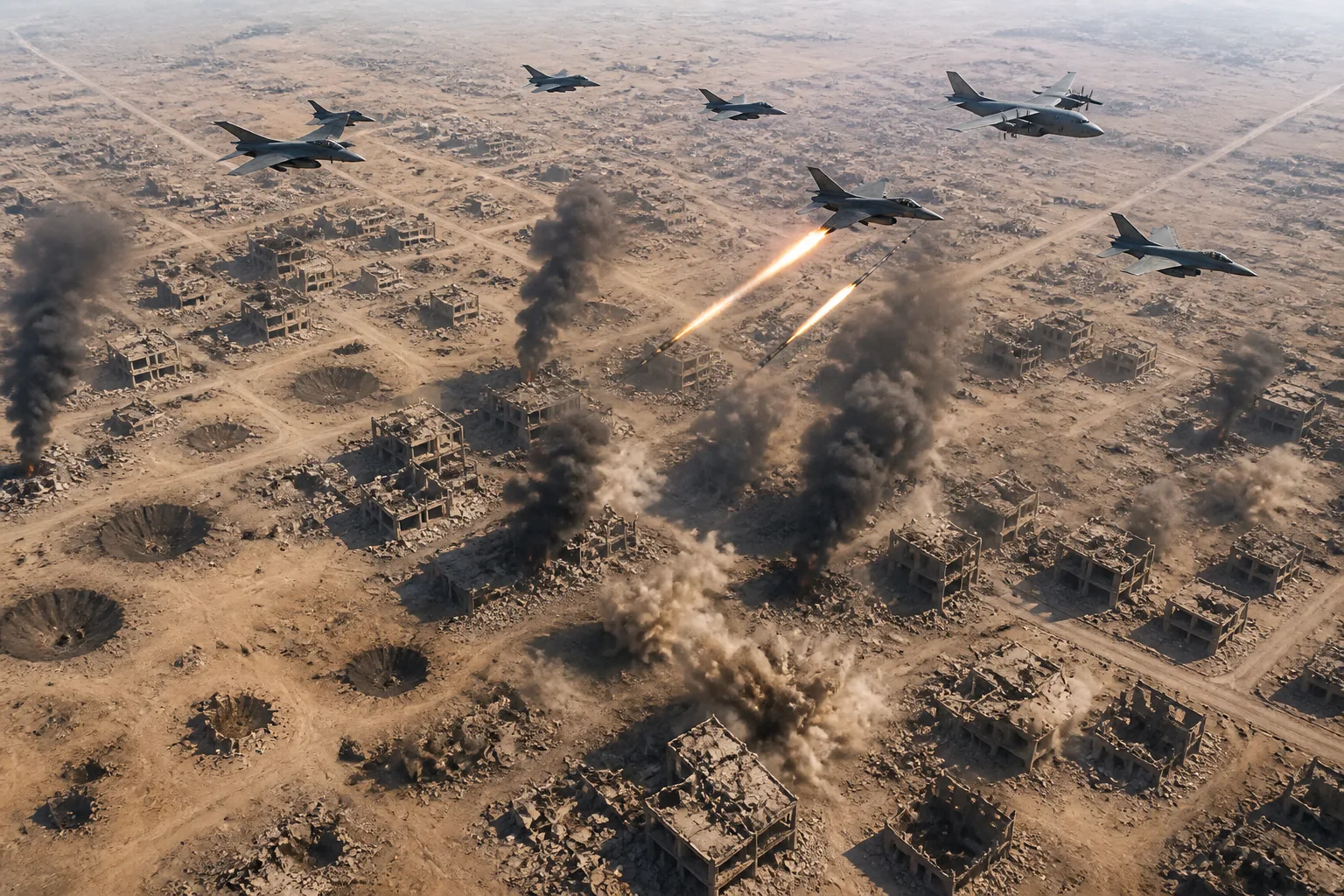
Xeneta Raises 2026 Air Freight Outlook as Middle East Conflict Tightens Global Cargo Capacity
Xeneta’s latest 2026 Air Freight Outlook has taken a sharp turn, forecasting a 5 % to 15 % rise in long‑term rates amid a Middle East conflict that began on 28 February 2026.
The shift reverses the December 2025 forecast that rates would fall 5 % to 10 %. It follows a sudden supply shock that erased 12 % of global air cargo capacity overnight, tightening the market.
In the first half of 2026, global capacity grew a modest 1 %, while demand climbed 4 %. That outpaced Xeneta’s original full‑year forecast of 2 % to 3 %, pushing combined spot and long‑term rates up 17 % year‑on‑year. “Spot rates are now plateauing, but they are not falling,” said Xeneta’s Chief Airfreight Officer, Niall van de Wouw, adding that the market had been volatile. He quipped, “On 27 February I would have bet on the Netherlands winning the World Cup before I put money on air rates jumping 40 %.”
Xeneta projects that demand growth will ease in the second half of 2026 as air cargo capacity gradually recovers. Capacity growth is expected to reach the lower end of its revised 2 % to 3 % forecast. The firm also highlighted a shift in the composition of demand.
Shipments linked to artificial intelligence (AI) are expanding rapidly. Global semiconductor sales jumped 106 % year‑on‑year in April 2026 – the strongest increase since records began in 1986. Although AI‑related goods account for less than 10 % of global air cargo volumes, they now drive demand on the Transpacific trade lane.
At the same time, e‑commerce demand is weakening. China’s low‑value and e‑commerce exports fell 7 % year‑on‑year in May 2026, marking the sixth consecutive monthly decline. Xeneta also cited new import rules for low‑value parcels in the European Union as a factor slowing e‑commerce growth. Van de Wouw said AI is replacing e‑commerce as the main growth driver for air freight.
The Middle East conflict has also raised geopolitical uncertainty as a key risk for the market. “If Dubai can be closed by rockets, what else is possible?” he warned. “There will be another wildcard and it will come at a cost for shippers.” The conflict’s impact on airspace and logistics hubs, particularly in the Gulf, has already forced airlines and freight forwarders to reroute shipments and has increased fuel costs.
Xeneta’s revised outlook reflects these developments. While the firm still expects long‑term rates to rise, it also notes that spot rates are stabilising rather than collapsing. The company’s updated forecast indicates that the market will remain tight, with capacity growth lagging demand for the remainder of the year.
The updated outlook has implications for shippers, airlines, and logistics providers worldwide. Higher rates may increase the cost of time‑critical shipments, while the shift toward AI‑driven cargo could influence the allocation of capacity on key trade lanes. The weakening e‑commerce sector may reduce the volume of low‑value parcels, potentially easing pressure on some routes.
In summary, Xeneta’s 2026 Air Freight Outlook now projects a 5 % to 15 % increase in long‑term rates, driven by a supply shock from the Middle East conflict, a 4 % rise in demand, and a shift toward high‑value AI shipments. Capacity growth is expected to remain modest, and geopolitical uncertainty remains the biggest risk for the market.