Singapore Shares Dip as STI Falls 0.7% Amid Middle East Tensions and Rising Oil Prices
A sharp 0.7 % slide in Singapore’s flagship index on September 9 2026 sent ripples through the region’s market as oil prices surged toward the $100 barrel threshold, fueled by fresh tensions in the Middle East.
The Straits Times Index (STI) closed at 5,729.63, down from 5,763.39 at the open and 5,706.68 at the low. The benchmark fell 0.7 % after a weak session on Wall Street the day before, and as crude prices edged closer to the $100 mark.
Asian stocks traded in a mixed pattern. Chipmakers posted gains, buoyed by sustained optimism around artificial intelligence, while the surge in oil prices and renewed geopolitical tensions added inflationary and interest‑rate risk to the market. The technology rally was tempered by concerns that AI could disrupt traditional software, weighing on the broader sector.
In the corporate arena, MoneyMax Financial Services (SGX:5WJ) saw its shares rise nearly 5 % to close at 5.73 cents per share. The pawn‑broker announced a proposed 1‑for‑3 bonus issue that could add up to 318 million bonus shares, according to a filing submitted to the Singapore Exchange on Tuesday. The move is expected to increase the number of shares outstanding, potentially diluting earnings per share but providing additional liquidity for shareholders.
Mapletree Logistics Trust (SGX:M44U), a Singapore‑listed logistics real‑estate investment trust, closed down 1 % after pricing its inaugural offshore renminbi bond. The 500 million‑yuan issue carries a three‑year coupon of 2.1 % per annum. The bond, part of the growing dim‑sum market, was priced in Hong Kong, where the trust’s bond unit is listed. The pricing event was followed by a modest decline in the trust’s share price, reflecting the market’s sensitivity to new debt issuances.
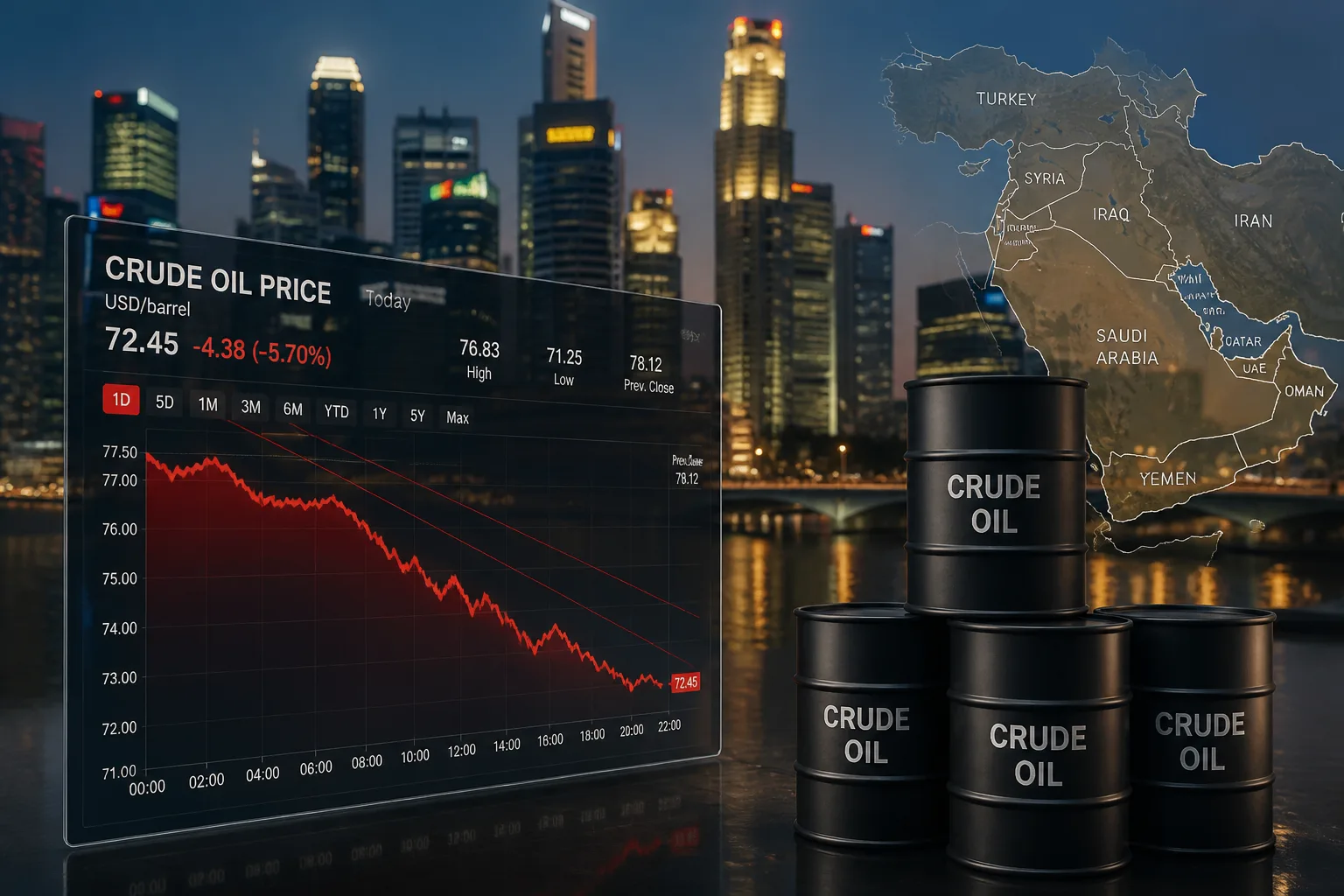
Crude oil prices have been a key driver of market sentiment. Brent crude was quoted at $99.65 per barrel, while WTI crude approached $100, a level not seen since mid‑2022. The price increase is linked to heightened tensions in the Middle East, which have raised concerns about supply disruptions and inflation. The higher oil price has implications for Singapore’s trade‑dependent economy and for companies with significant energy exposure.
The STI’s performance mirrors the broader Asian market’s reaction to global macroeconomic factors. While chipmakers benefited from AI enthusiasm, the market remained cautious amid rising commodity prices and geopolitical uncertainty. The mixed outcome on the Singapore Exchange underscores the interconnectedness of local equities with global events.
The Singapore Exchange, the region’s second‑largest market by capitalization, continues to serve as a hub for equity, fixed‑income, and commodity trading. The STI, jointly calculated by SGX, SPH Media Trust, and FTSE Group, tracks the top 30 companies listed on the exchange, providing a barometer of Singapore’s corporate health.
In summary, the STI’s 0.7 % decline on September 9 2026 was driven by a combination of rising oil prices, Middle East tensions, and mixed corporate performance. MoneyMax’s share rise on its bonus‑issue announcement and Mapletree’s share drop following its renminbi bond pricing illustrate how individual corporate actions can influence market dynamics. The day’s trading highlights the sensitivity of Singapore’s market to both domestic corporate developments and global macroeconomic shifts.
The market is expected to monitor the trajectory of oil prices and geopolitical developments closely, as these factors continue to shape investor sentiment in the region.